Continuing the ABC challenge which I have decided to make my theme for this blog until I reach the end of the alphabet. I will be madly scrambling to find a post for a few of the letters, I think!
Ballads: what are they? Probably most of us studied ballads as a poetic form when we were in school but I am referring to the songs. Ballads have been in existence since before written history probably; they are the songs of the troubadours who wandered from town to town, spreading the news in song. They are the songs of farmers and shepherds and milkmaids, of soldiers and forlorn lovers. Ballads tell stories of sadness, of violence, good deeds and evil deeds, of love lost and also love found; the stories of battle victories and defeats, of hopelessness and despair, grief, and joy. Sometimes they are also hilarious and ribald, but always they tell stories.
That is what drew me to ballads when I was fairly new to storytelling. I was listening to every storyteller and story I could find, exploring styles and story types when I stumbled on a CD of Appalachian ballads sung by Doug and Jack Wallen of North Carolina. I was hooked, and then amazed to find that I could sing along with them. Me, who never sang because I thought I couldn't! I began exploring this old style of storytelling and then began learning ballads, one by one. I was not in the fortunate position of having an oldtime singer living nearby so I had to learn from recordings, the occasional meetup with other singers, and even matching words with midi files online to get the tune to one I wanted to learn.
 |
| from wikimedia commons |
And I read and read and read. I learned that those mysterious "Child ballads" were really just ballads collected by
Francis James Child, a poor boy who became a Harvard Dean and traveled to England to collect the songs he had become fascinated with. Thank goodness for him; had he not caught the songs when he did, who knows what might have happened to them? People in the British Isles had all but stopped singing the tunes when Child arrived; he consulted other collectors, worked with historical collections and eventually published his 10 volume work called
English and Scottish Popular Ballads. It remains the most complete work ever done on the topic.
 |
| from wikipedia |
What Child didn't know was that in America the old songs were still being sung, particularly in the Appalachian mountains. Some changes had been made here and there to reflect the ballads' new home but for the most part they were intact.
It took
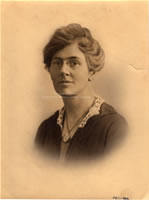
Olive Dame Campbell, wife of John C. Campbell, and founder of the folk school that bears his name in North Carolina, to notice the strange tunes being sung by the mountain people she had come to work with. Olive Dame Campbell noted the melodies and lyrics as best she could and took her collection to
Cecil Sharp. Sharp was an English scholar of sword dances and folklore and he was so excited by Campbell's find that he immediately began fundraising for a trip to the mountains to find the songs for himself, and to record them on what was at the time state-of-the-art wax cylinders. Sharp made two trips to the Appalachians, and published his discoveries in his book
Folk Songs of the Southern Appalachians. He was assisted in his work by
Maud Karpeles and after Sharp's untimely death she continued to publish his findings.
There were the broadside ballads, too--those songs written by an unknown hand and sold on the streets for a penny or two. Many have passed down into the oral tradition to become standards of the genre. Pretty Polly, Pretty Saro and Butcher's Boy are ballads I sing that fall into this category.
Ballads often have "traveling verses," or verses that occur in several different songs. The most familiar of these is the verse about a rose springing from the grave of the one who was true and a brier from the grave of the one who was not, and twining together over the graveyard gate to form a lover's knot.
There have been many other songcatchers in the Appalachians: John Harrington Cox, Alan and John Lomax and others, but Cecil Sharp's work was like the lifting of a veil. Today ballad-singing is perhaps not as popular even in these hills as it once was but there are still singers like Sheila Kay Adams, Elizabeth LaPrelle and Bobby McMillion who continue singing the songs passed down to them through their families. And there are singers like me, latecomers to these hills who have found their voice in the mountain ballad.