Showing posts with label Christmas. Show all posts

Mistletoe: Legend and Lore

While searching for folklore and legends about mistletoe, I came upon a reference to a ballad called "The Mistletoe Bough." Of course that sent me searching for lyrics, melody and more information.
What I found was intriguing: a ghost story, set at Christmas time, that is also a tragic love story, written as a poem that was later set to music. Opinions differ on the location of the story's events, the time they supposedly occurred, when the poem was written and even if it is a true story or merely a romantic tale.

The story apparently struck a chord with many people over the years. The ballad has been recorded by artists even recently (and available as a ringtone!). The story has been performed as a play and as a pantomime.

Something else that I found interesting was that the name of the young lady's lover, Lord Lovell, is the title of yet another ballad. Is it one and the same man? Proably not, but an odd coincidence all the same.

The ballad/poem continues to draw lovers of old mysteries and the singers of today. And if you should happen to buy an old English trunk, you might find that what you have was the final resting place of the young lady in the song.
This is the ballad version of the poem:
The Mistletoe Bough

by Thomas Haynes Bayley


The mistletoe hung in the castle hall
The holly branch shone on the old oak wall.
The Baron's retainers were blithe and gay,
Keeping the Christmas holiday.
The Baron beheld with a father's pride
His beautiful child, Lord Lovell's bride.
And she, with her bright eyes seemed to be
The star of that goodly company.
Oh, the mistletoe bough.


"I'm weary of dancing, now," she cried;
"Here, tarry a moment, I'll hide, I'll hide,
And, Lovell, be sure you're the first to trace
The clue to my secret hiding place."
Away she ran, and her friends began
Each tower to search and each nook to scan.
And young Lovell cried, "Oh, where do you hide?
I'm lonesome without you, my own fair bride."
Oh, the mistletoe bough.

They sought her that night, they sought her next day,
They sought her in vain when a week passed away.
In the highest, the lowest, the loneliest spot,
Young Lovell sought wildly, but found her not.
The years passed by and their brief at last
Was told as a sorrowful tale long past.
When Lovell appeared, all the children cried,
"See the old man weeps for his fairy bride."
Oh, the mistletoe bough.

At length, an old chest that had long laid hid
Was found in the castle; they raised the lid.
A skeleton form lay mouldering there
In the bridal wreath of that lady fair.
How sad the day when in sportive jest
She hid from her lord in the old oak chest,
It closed with a spring and a dreadful doom,
And the bride lay clasped in a living tomb.
Oh, the mistletoe bough.
Here is the poem:

The Mistletoe Bough

by Thomas Haynes Bayly (spelled variously in different documents, as you can see)
The mistletoe hung in the castle hall,
The holly branch shone on the old oak wall;
And the baron's retainers were blithe and gay,
And keeping their Christmas holiday.


The baron beheld with a father's pride
His beautiful child, young Lovell's bride;
While she with her bright eyes seemed to be
The star of the goodly company.

'I'm weary of dancing now," she cried;
"Here, tarry a moment - I'll hide - I'll hide!
And, Lovell, be sure thou'rt first to trace
The clew to my secret lurking place."

Away she ran - and her friends began
Each tower to search, and each nook to scan;
And young Lovell cried, "O, where dost thou hide?
I'm lonesome without thee, my own dear bride."

They sought her that night! and they sought her next day!
And they sought her in vain while a week passed away!
In the highest, the lowest, the loneliest spot,
Young Lovell sought wildly - but found her not.

And years flew by, and their grief at last
Was told as a sorrowful tale long past;
And when Lovell appeared the children cried,
"See! the old man weeps for his fairy bride."

At length an oak chest, that had long lain hid,
Was found in the castle-they raised the lid,
And a skeleton form lay moldering there
In the bridal wreath of that lady fair!

0, sad was her fate!-in sportive jest
She hid from her lord in the old oak chest.
It closed with a spring!-and, dreadful doom,
The bride lay clasp’d in her living tomb!

So there's the story. Now for all the background sources:
Information and the melody of the ballad can be found at this website.
This site offers a brief background of the song and its origins, but for a full, detailed history of the song from the book, Stories of Famous Songs, go here.
One version of the ballad, and a link to a sung version that didn't work for me; perhaps you will have better luck.
A little more trivia about the poem and the place where the events supposedly happened.
The poem arranged as a play--an interesting idea for a Christmas play, if a bit on the dark side.
A New York Times article from 1877 about a pantomime performance of the story.
Today you can have the song as a cell phone ringtone performed by Nick Cave and the Bad Seeds.
Anthony Trollope's story of the same name speaks more of romance than folklore.
An entirely different poem by the same name, by American poet Ellis Parker Butler (b.1869, d.1937).
There you have it: The Mistletoe Bough in many shapes and forms. It wasn't what I started to research, but I found myself following the trail of this old story, and thought many of you might find it as interesting as I did.
Caroling Program Scheduled in Ripley

from the Parkersburg News & Sentinel, Parkersburg, WV

RIPLEY — The history of caroling is coming to Alpine Theatre in Ripley on Nov. 26.

Storyteller Susanna “Granny Sue” Holstein and musician Jeff Seager have been a-caroling across the region for more than five years. They are bringing their sing-along folk performance to Ripley.

“Here We Come A-Caroling” is a combination of Christmas carols and the stories behind the songs and will be presentee at 2 p.m. Nov. 26 in the historic Alpine Theatre, 210 W. Main St., Ripley.

Admission at the Alpine is $10 for adults and $5 for senior citizens and students.

“I have always loved carols,” said Holstein, whose mother was a World War II bride from England. “Mom brought many of her English customs and folklore with her to America, especially the Christmas ones.”

That meant she grew up with plum puddings, fruitcakes and a mistletoe ball in the house.

“We also grew up with carols,” she said. “Mom would play them from the beginning of December until the 12th night, and we often sang them as a family. Sometimes we went caroling in our neighborhood.”

The West Virginia History Hero recipient from Sandyville learned that she had a common interest in the songs with Seager, a guitarist from South Charleston. A conversation led to the development of the program.

Seager says they have performed in state parks, libraries and churches.

“Each year we find more songs that have intriguing stories behind them, so our repertoire keeps changing,” he said. “Many of the songs we perform have Appalachian connections. Some are versions of old songs from the British Isles and others were written right here in the mountains.”

Songs range from “The Huron Carol,” from the 17th century Native Americans. It was the first carol written on the continent. Among the more modern tunes, “Frosty the Snowman” was written by West Virginian Jack Rollins. “Silent Night” is popular in multiple languages.

Holstein has been storytelling as “Granny Sue” for more than 20 years. She leads the annual “Do You Believe?” ghost walk through downtown Ripley each October.

Christmas! Lore, Recipes, Stories, and More


I have compiled a list of posts from my other blog that have ideas, stories, crafts, folklore, traditions and more about this holiday season.


From Yule and Solstice to Old Christmas to elves and paper stars and simple gifts to make, there is a bit of something for everyone in the list below.

Enjoy!


Mincemeat and the mincemeat tarts recipe

Here We Come A-Caroling!

Here We Come A-Caroling!

 My mind has been filled with carols these past few weeks as I practice and research for the upcoming Here We Come A-Caroling! program. I present this show with my friend, folk musician Jeff Seager, and each year we add new stories and songs to our performance. This year's new songs include:
  • Nova! Nova!, a medieval carol with an interesting construction
  • Beautiful Star of Bethlehem, a carol written in an Appalachian cow barn
  • Welcome Yule!, a hearty welcome to the coming of Solstice
There will be stories that tell the history and lore behind each of these carols as well as all of the other carols included in our program. Some favorites, such as The Huron Carol and Don in Yon Forest are also on the agenda. Recently I learned of a family connection to the Christmas Truce of 1914, and that story will be included in our rendition of Silent Night.


From last year's fun: attendees playing parts with masks for an old
Appalachian song.
There is so much more--there is such a wealth of carols! And there is fascinating lore too--the traditions, superstititions, prohibitions, etc. connected with our celebrations of the holidays. Holly, ivy, the bringing in of greenery, the food customs, ways to assure good luck and fortune, finding a mate, the Yule log...it's not what to include, it's how much we can manage in the time we will have.

Here is the schedule of our performances so far. Call or email me for more information. I hope to see you at one of these events!

  • NOVEMBER 28: HERE WE COME A-CAROLING, CEDAR LAKES, RIPLEY, WV 7:00PM, ROAD SCHOLARS PROGRAM.
  • DECEMBER 10: HERE WE COME A-CAROLING! HOUSE CONCERT, FREDERICK, MD. 7:00PM. CONTACT ME FOR DETAILS.
  • DECEMBER 11: OLDE TYME CHRISTMAS, HARPER'S FERRY, WV, ST. PETER'S CHURCH, 1:00PM, FREE PUBLIC PROGRAM.
  • DECEMBER 17: HERE WE COME A-CAROLING! PHILIPPI PUBLIC LIBRARY, PHILIPPI, WV 2:00PM, FREE PUBLIC PROGRAM.
  • DECEMBER 18: HERE WE COME A-CAROLING! BLACKWATER FALLS STATE PARK, DAVIS, WV 10:00AM, FOR BREAKFAST WITH SANTA PROGRAM.

Christmas Lore: The Christmas Tree

Good morning!

I spent some time reading up on the history of the Christmas tree this morning while I drank my tea. My friend Jeff and I are putting together our Christmas carols program and adding new material for this year's presentations. I always enjoy the research as we prepare the songs and stories each year.

The tree is another example of the blending of earlier pagan beliefs with the symbols and beliefs of Christianity as this "new" religion. Mistletoe, holly, a Solstice/winter celebration, the Yule log and many other aspects of earlier traditions found their way into the rituals associated with the celebration of Christ's birth. Early missionaries often found ways to link the old ways to their teachings.

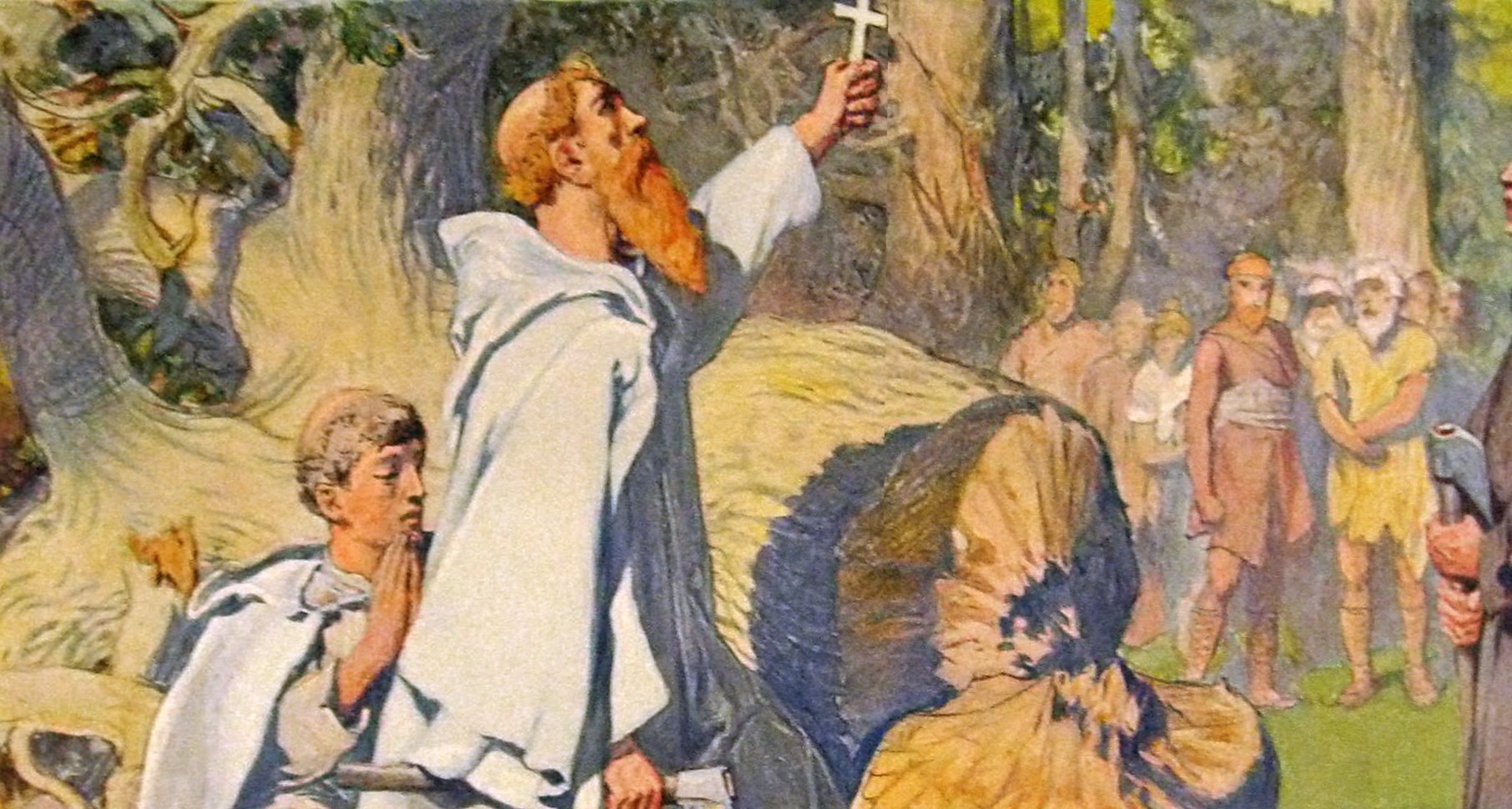
The legend of Saint Boniface is one good example. According to the story, Boniface came upon a group of pagans preparing a human sacrifice at their sacred oak, called Donar's Oak. Boniface took an axe and struck a blow at the tree, which immediately fell. He then pointed to an evergreen as a symbol of the everlasting life promised by the religion he brought to them.

From The Christmas Tree by Daniel J. Foley,
Chilton Company Book Division, NY: 1960.
The custom of a decorated and lighted evergreen began in Germany, beginning with a pyramid made of wood and lighted with candles and decorated. Since it was also the custom to bring a small evergreen inside for greenery in the winter months, it's not difficult to see how the lights and decorations moved from thelichshtock to the evergreen (usually a fir). The idea did not reach American shores until the Victorian era, making its way from Germany to England first. In many instances, the greenery was simply an evergreen bough places on a table and decorated.

My 2014 tree
Some years I have a real tree, others years we have an artificial tree, but always I bring in live greenery to decorate my house, continuing the old tradition of "bringing in Christmas."

My 2011 tree
There is nothing like the scent of pine to make me feel the season is truly here. I won't do it just yet, though, because the greens will dry out, and it's still too soon to be decorating in my opinion. I prefer to wait until we've enjoyed Thanksgiving, and then move gradually into the next season. But working on the carols program puts me in the holiday mood, and makes me look forward to the pleasures on the way.

House Concerts: A New Way to Entertain

Planning a holiday party? Or just want to have some friends over for a nice evening of entertainment and talk? Then consider a house concert.

Most of us plan parties or get-togethers of some kind during the year, and these events usually follow a similar path: munchies, liquid refreshments, perhaps dinner and music. But imagine adding a new twist: a storyteller to entertain your guests with tales wild and wonderful, true and maybe-true, outrageous and touching, humorous and uplifting.

House concerts have taken off across the nation as a different and enriching touch to the usual party. Storytellers, musicians and poets are finding the venue perfect for intimate, informal presentations of their work to audiences who may be new to their artform. For the host, a house concert bumps up their event a notch, making it not only an evening of fun but one that supports the arts. Concerts can be planned for family audiences or adult-only groups.

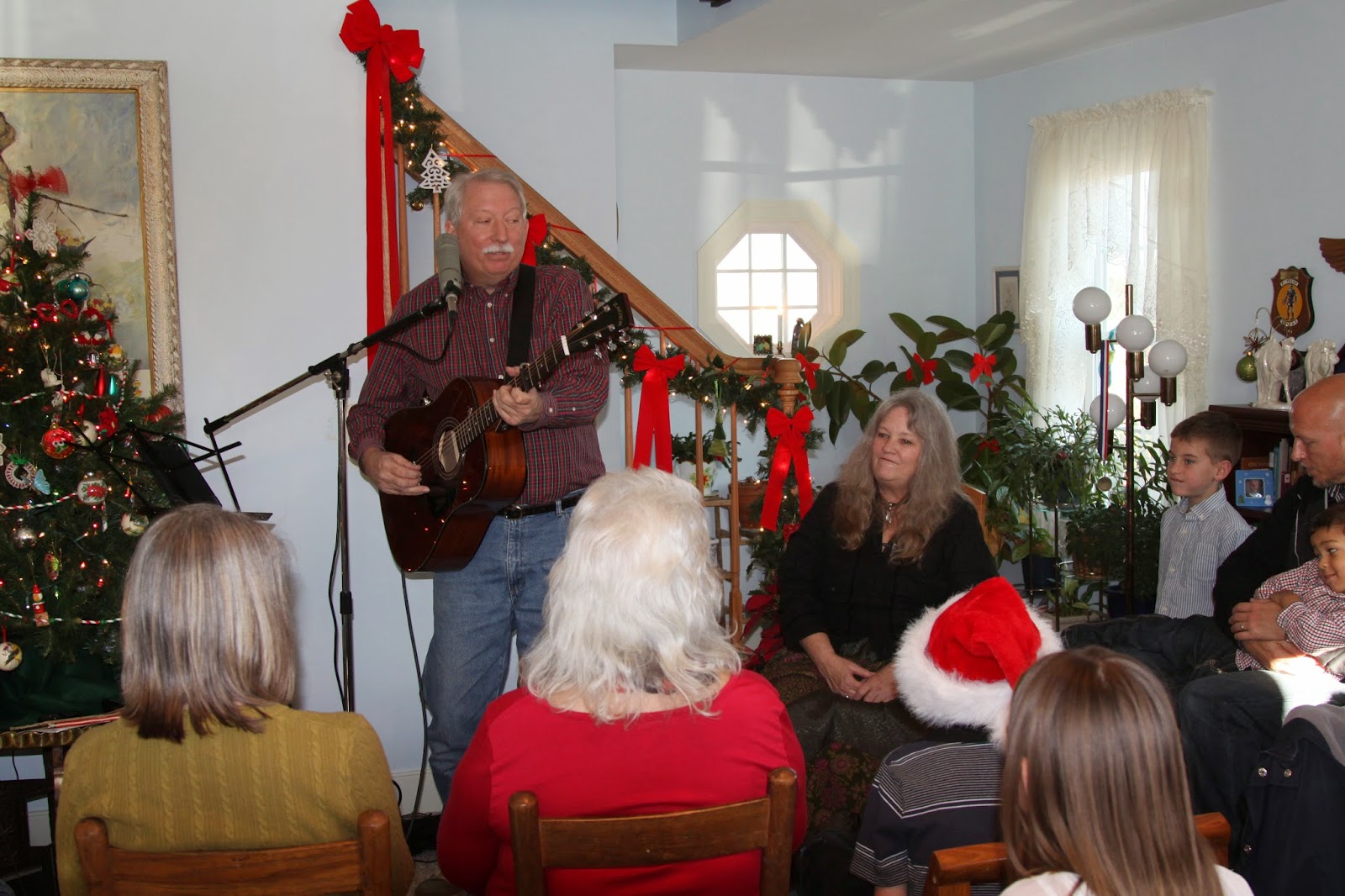
I have been lucky enough to be invited to present at several house concerts over the past two years. It is always a pleasure--good people, good refreshments, inviting surroundings and the opportunity to interact personally with small audiences of appreciative and attentive listeners. Many performers today are often able to book enough house concerts to enable them to travel across the country to distant events. The house concert is becoming a viable income source for many a struggling artist.

How does it work? It's simple enough. The host plans a party and invites his/her friends. How many depends on the space available but 15-40 seems to be the usual number. Food and beverages are provided by the host, and sometimes the event is a potluck with attendees also providing some of the refreshment. Each guest is asked for a "donation" of a specific amount, generally in the $10-$20 range. The money collected goes to the invited performer.

Where else can one attend a concert where they can interact with the performer and get quality, often homemade refreshments for that price? It's a great deal for everyone involved: the hosts have a great event for their friends with minimal effort and cost, the guests have a fine evening out, again at minimal cost, and the performers make enough, hopefully, to make it worth their while.

If you are interested in a house concert, get in touch and I'd be happy to discuss it with you. Call 866-643-1353 tollfree, or email me at susannaholstein@yahoo.com and let's get started talking about your event.

Sir Cleges and the Christmas Cherries: A Retelling of a Story from the Legends of Arthur


Sir Cleges was knight like no other. Brave and fearless in battle, he had a kind heart and always helped anyone in need, lending money without expecting repayment, or forgiving rents if his tenants faced hard times.But over time he lost his fortune through his unstinting generosity, and had little left but the roof over his head. This Christmas season, there would be no celebrations, gifts, rich foods and visitors. There was no food at all, and only enough wood to keep the smallest of fires. Still, Sir Cleges knew there were people in worse shape than he was--people with no food at all, no home and no fire to warm them. 

Sir Cleges walked out one day on his land, thinking about how, even in his current situation, there were still so many who would spend the holidays with even less. He sat down under his favorite cherry tree, wondering if there was some way he could provide something for those poor people. A sound brought him out of his reverie.

"Why, it sounds like wind blowing through summer leaves, and yet here it is deep mid-winter!" Sir Cleges looked up and was stunned to see the tree was in full bloom and covered with ripe, juicy cherries.

"How can this be?" he exclaimed. "Cherries in winter? This must surely be a miracle!" He picked as many as his hands could hold and hurried home to his wife.

Reaching his home, he called out, "Look! Look what I have found! Can you believe it, cherries in winter?"

"It is a miracle!" she cried. She put one of the cherries into her mouth and smiled. "You must pick some of these magic cherries, Sir Cleges, and take them to Uther Pendragon. He is at Cardiff Castle now, I hear, and that is not so far away. He will be amazed to see these cherries, here at Christmas time!"

Sir Cleges agreed that this was a good plan, He picked a basket full of cherries, said good-bye to his wife and set off on his journey.

"Oh my, but will the King receive me, dressed as I am? Once I wore the raiment of a proud knight; now I am dressed like a beggar." Sir Cleges looked down at his ragged clothing in dismay. Then he straightened up and strode briskly on his way. "I may not be well dressed, but I am still a knight. I must act like one."

'Halt!" called the sentry at the castle gate. "Who are you and what is your business here?"

"Good day," said Sir Cleges. "I am Sir Cleges, a knight of His Majesty's realm. I have come to bring the King some Christmas cherries."

"You must pay me to enter here," the sly guard said. "What will you pay?"

"I have no money,"said Sir Cleges. "You can see my my clothing that hard times have overtaken me. All I have are these cherries, which I mean to give to the King."

"You will give me one third of your reward for bringing the King these cherries, or I will send you on your way."

Sadly, Sir Cleges agreed. He entered the castle and walked to the keep, but another guard stopped him.

"Halt! Who do you think you are, trying to enter here in your filthy rags?"

"I am Sir Cleges. I have come to bring these cherries to the King."

"You'll not enter here for free, my friend. What payment can you offer?"

Once again Cleges agreed to give the guard one third of whatever reward he was granted by the King. He walked up the stairs to the great hall, when yet another guard stopped him. Again payment was demanded.

"I suppose you want payment too!" Sir Cleges exclaimed.

"Take your cherries to the King. But you must give to me one third of whatever the King gives you as a reward for bringing him such lovely fruit."

Sir Cleges had no choice but to agree once again to these terms. He walked into the hall and bowed low, presenting his basket of cherries to the King.

"Cherries in winter! What a miracle!" The King shouted. He passed the basket of cherries around to his dinner guests, and all exclaimed in delight at such an amazing treat.

"Please, Sir Cleges, join us at the table." Sir Cleges sat down and ate of the rich and plentiful meal before him.

"Tell me, Sir Cleges, what reward do you wish to have in payment for bringing me such a treat?" asked the King.

"If it please Your Majesty, I should like permission to give twelve strokes with my stick to the people I choose."

The King stared at Sir Cleges. "That is a strange request indeed. Are you sure you would not prefer gold or meat or jewels instead?

"Thank you, Sire, I want only what I have asked."

"Very well, then," said the King. So it shall be."

Sir Cleges walked out of the hall and was soon stopped by the third guard. "Give me my third of your reward!" the man demanded. Sir Cleges struck the man on the back with four mighty blows that sent the guard howling out of the hall.

When he reached the entrance to the keep, the second guard demanded his payment. Sir Cleges obliged him, swinging his stick with all his strength and leaving the man crying on his knees. At the gate, the first guard stopped Sir Cleges and said, "All right, now pay me what is due me!" Once more Sir Cleges wielded his stick and struck the man the last four blows. As he passed through the gate, one of the King's men rushed up to him.

"Sir Cleges, Uther Pendragon has asked that you return to his hall," the man said. Sir Cleges was surprised but obeyed, returning to the presence of the King.

"I have recalled who you are, Sir Cleges. How come you to be dressed in the rags of a poor man?"

Sir Cleges bowed his head. "I have been too generous, Your Majesty, and then hard times struck and I have nothing left but him home and my family. And I thank God to have that much when so many have far less."

"But why did you not ask for gold or food as a reward? Surely that would have served you better?"

Sir Cleges explained about his encounters with the greedy guards. On hearing the tale, Uther Pendragon laughed and laughed.

"You are a clever man, Sir Cleges. Your story has earned another reward. You shall have new lands, and control of this Castle as well. But you must promise me to be a wiser steward of your money, and to be more cautious in your giving in the future."

And so it was, and so Sir Cleges did, and all was well with him once again.

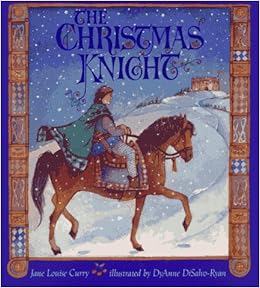
There is a beautifully illustrated version of this story in achildren's picture book by Jane Louise Curry.

You can read more about this story and its place in Arthurian legendry at these sites:

University of Rochester Middle English Texts Series

Translation by Jessie L. Weston

San Francisco State University Medieval Forum

Database of Middle English Romance


Copyright Susanna Holstein. All rights reserved. No Republication or Redistribution Allowed without attribution to Susanna Holstein.